
Mobile Workforce Management: Technology Transforming Driver Productivity and Safety
Truck drivers spend countless hours isolated behind the wheel, disconnected from dispatchers who need real-time updates, supervisors who require performance data, and systems that could prevent the delays, safety incidents, and inefficiencies that plague traditional fleet operations. Paper delivery tickets, phone-based communication, and manual timekeeping have created a productivity gap that costs the transportation industry billions annually through wasted driver time, incomplete deliveries, poor route decisions, and safety incidents that modern mobile technology could prevent.
The driver shortage crisis affecting every segment of the logistics industry makes maximizing existing driver productivity and retention absolutely critical, yet most organizations continue relying on outdated communication methods that frustrate drivers while limiting operational visibility and control. Forward-thinking transportation companies have discovered that mobile workforce management technology transforms driver operations by providing real-time communication, electronic proof of delivery, automated time tracking, and safety monitoring that improves both productivity and job satisfaction.
Modern mobile platforms don’t just digitize paperwork—they fundamentally change how drivers interact with operations systems, receive job assignments, navigate routes, document completed work, and communicate exceptions that require immediate attention. The result is productivity improvements of 20-30% combined with safety enhancements and driver satisfaction gains that reduce the costly turnover plaguing the industry. Organizations that continue forcing drivers to operate without modern mobile tools face irreversible competitive disadvantage against companies that leverage technology to empower their mobile workforce while capturing the operational visibility that enables continuous improvement.
The Cost of Disconnected Mobile Workforce
Disconnected drivers operating without modern mobile technology create systematic inefficiencies that devastate fleet productivity while generating safety risks and driver dissatisfaction that compound workforce shortage challenges. The absence of real-time communication and digital tools forces drivers into outdated workflows that waste hours daily while preventing organizations from achieving the operational visibility required for effective fleet management.
Communication delays inherent in phone-based driver contact create countless small inefficiencies that accumulate into massive productivity losses. Drivers waiting for dispatcher callbacks, playing phone tag during busy periods, or unable to reach operations when exceptions occur lose productive hours that could be captured through instant mobile messaging systems that enable asynchronous communication without interrupting driving activities.
Paper-based delivery documentation generates substantial administrative overhead while creating opportunities for errors, disputes, and cash flow delays. Manual paperwork requires driver time for completion, creates challenges for customers who need electronic records, delays billing processes while physical documents travel to billing offices, and provides inadequate audit trails when delivery disputes arise weeks or months after completion.
Route inefficiency results when drivers lack access to real-time traffic information, customer updates, or dynamic rerouting instructions that could prevent delays and optimize daily productivity. Traditional printed route sheets become obsolete when traffic incidents occur, customers reschedule deliveries, or new priority jobs require route adjustments that cannot be communicated effectively to drivers in the field.
Safety incidents occur more frequently when drivers operate without modern safety monitoring and coaching systems that provide immediate feedback on risky behaviors. Without real-time safety alerts and performance data, dangerous driving patterns continue undetected until accidents occur, creating liability exposure and insurance costs that far exceed mobile technology investment requirements.
Driver turnover accelerates when organizations fail to provide mobile tools that drivers consider standard in modern work environments. Younger drivers particularly expect mobile technology that simplifies their work and enables efficient communication, making technology-deficient fleets less attractive employers in a highly competitive labor market.
Customer service suffers when drivers cannot provide accurate arrival information, access special delivery instructions, or communicate delivery issues in real-time. This communication gap creates customer dissatisfaction while generating service failures that damage business relationships and competitive positioning.
Understanding Mobile Workforce Management Technology
Mobile workforce management encompasses comprehensive technology platforms that connect field personnel with operations systems, enabling real-time communication, work assignment, performance monitoring, and documentation that transforms disconnected drivers into integrated members of coordinated logistics operations. These platforms extend beyond simple communication apps to provide complete digital workflows that eliminate paper processes while capturing operational data that drives continuous improvement.
Cloud-based architecture enables mobile workforce management platforms to operate reliably across diverse networks and devices while maintaining real-time synchronization with central operations systems. This architecture ensures drivers always have access to current information regardless of location while enabling immediate updates when dispatch assignments change or new information becomes available.
Native mobile applications designed specifically for smartphone and tablet use provide intuitive interfaces that drivers can operate efficiently even while wearing gloves or working in challenging environmental conditions. These purpose-built applications outperform generic tools through features optimized for transportation workflows including large touch targets, voice input capabilities, and offline operation that maintains functionality during connectivity gaps.
Integration capabilities connect mobile workforce management platforms with dispatch systems, transportation management systems, customer relationship management platforms, and accounting systems to create unified data flows that eliminate manual data entry. This integration ensures information entered by drivers automatically updates all relevant systems while enabling drivers to access information from multiple sources through single mobile interfaces.
Offline functionality ensures drivers can continue working productively during connectivity gaps that inevitably occur in remote areas or buildings with poor cellular coverage. Mobile workforce management platforms cache essential information locally while queuing updates for transmission when connectivity resumes, preventing productivity losses from network limitations.
Configurable workflows enable mobile workforce management platforms to adapt to organization-specific processes and requirements without requiring custom software development. This configurability supports diverse operational models while enabling continuous process improvement through workflow adjustments that reflect lessons learned and changing business requirements.
Real-Time Communication and Dispatch Integration
Modern mobile workforce management platforms transform driver-dispatcher communication through instant messaging, automated notifications, and integrated workflows that enable rapid information exchange without the delays and inefficiencies of phone-based contact. This real-time communication capability dramatically improves operational coordination while reducing the frustration that traditional communication methods create for both drivers and dispatchers.
Instant messaging enables drivers and dispatchers to exchange information quickly without the interruptions and inefficiency of phone calls that require both parties to be available simultaneously. Text-based communication allows drivers to respond during natural breaks while enabling dispatchers to contact multiple drivers efficiently without sequential phone calls that consume valuable time.
Automated notifications alert drivers to new assignments, route changes, and important updates without requiring dispatcher intervention. These automated messages ensure drivers receive time-sensitive information immediately while freeing dispatchers to focus on exception handling and strategic coordination rather than routine information transmission.
Job assignment workflows deliver complete work orders to driver mobile devices with all necessary information including addresses, customer contact details, special instructions, and required documentation. This digital assignment eliminates the errors and omissions that occur when information is communicated verbally or through hastily written notes.
Exception reporting enables drivers to communicate problems, delays, or customer issues immediately through structured forms that capture essential details while triggering appropriate response workflows. This systematic exception handling ensures issues receive prompt attention while creating documentation that supports customer communication and process improvement.
Driver acknowledgment features require drivers to confirm receipt and understanding of important messages, eliminating the uncertainty inherent in one-way communication methods. This confirmation capability provides dispatchers with confidence that critical information reached drivers while creating accountability for message receipt and action.
Location-aware messaging enables dispatchers to target communications to drivers in specific geographic areas or proximity to particular customers. This location intelligence supports dynamic dispatch decisions while enabling efficient handling of emergency or priority assignments that require nearby driver assistance.
Electronic Proof of Delivery and Documentation
Electronic proof of delivery capabilities eliminate paper-based documentation workflows while providing superior audit trails, customer visibility, and billing efficiency that paper processes cannot match. This digital documentation transformation accelerates cash flow, reduces disputes, and improves customer satisfaction through immediate access to delivery confirmation and supporting details.
Digital signature capture enables customers to acknowledge delivery electronically through driver mobile devices, creating tamper-proof delivery confirmation that is immediately available to billing and customer service teams. These digital signatures provide superior legal evidence compared to paper receipts while eliminating the delays inherent in physical document processing.
Photo documentation capabilities enable drivers to capture images of delivered goods, delivery locations, and any exceptions or damage that could generate future disputes. These photos provide visual evidence that resolves disputes quickly while protecting organizations against fraudulent damage claims or delivery denials.
Barcode scanning integrates with mobile workforce management platforms to verify correct item delivery while ensuring accurate documentation of serial numbers, batch codes, and quantity verification. This scanning capability reduces delivery errors while creating detailed records that satisfy customer requirements and regulatory compliance obligations.
Time-stamped delivery records capture precise delivery completion times automatically, eliminating the inaccuracies of manual time recording while providing audit trails that satisfy customer requirements and contractual obligations. These automated timestamps ensure billing accuracy while providing data that supports performance analysis and process improvement.
Custom forms and checklists enable organizations to capture delivery-specific information including vehicle inspections, quality checks, customer surveys, and specialized documentation requirements. These configurable forms eliminate paper processes while ensuring comprehensive information capture that supports diverse operational requirements.
Immediate data synchronization ensures delivery documentation reaches billing and customer service systems within minutes of completion, enabling same-day invoicing and immediate customer access to delivery confirmation. This synchronization dramatically improves cash flow while reducing the customer service inquiries that paper-based delays generate.
Driver Safety Monitoring and Coaching
Mobile workforce management platforms integrate with vehicle telematics and driver monitoring systems to provide real-time safety alerts, comprehensive safety scoring, and targeted coaching that reduces accidents while demonstrating the safety culture that reduces insurance costs and liability exposure. This safety focus protects both drivers and organizations while supporting the driver retention that technology-enabled safety programs enable.
Real-time safety alerts notify drivers immediately when unsafe behaviors occur including harsh braking, rapid acceleration, excessive speed, or distracted driving patterns. These instant alerts enable immediate behavior correction while demonstrating organizational commitment to safety that resonates with drivers who appreciate employer concern for their wellbeing.
Driver safety scoring provides objective performance measurement based on comprehensive data analysis that eliminates the subjectivity and inconsistency of traditional safety evaluations. These scores enable fair recognition programs while identifying drivers who require additional training or coaching to meet safety standards.
Video-based coaching uses dashcam footage to provide specific examples of both excellent and concerning driving behaviors during coaching sessions. This visual evidence makes coaching more effective by demonstrating exactly what behaviors need modification while celebrating safe driving examples that should be replicated.
Safety training integration delivers targeted training modules through driver mobile devices based on specific safety concerns or regulatory requirements. This mobile training enables flexible completion during downtime while ensuring all drivers receive consistent safety messaging and skill development.
Safety performance tracking monitors trends over time to identify improvement or deterioration in individual driver performance and fleet-wide safety metrics. This tracking enables proactive intervention before safety issues generate accidents while demonstrating safety program effectiveness to insurance providers and regulatory authorities.
Recognition programs leverage safety data to identify and reward consistently safe drivers through public recognition, incentive payments, or preferential assignment selection. These recognition programs reinforce safe behaviors while improving driver satisfaction and retention through demonstrated appreciation of excellent performance.
Route Optimization and Navigation for Drivers
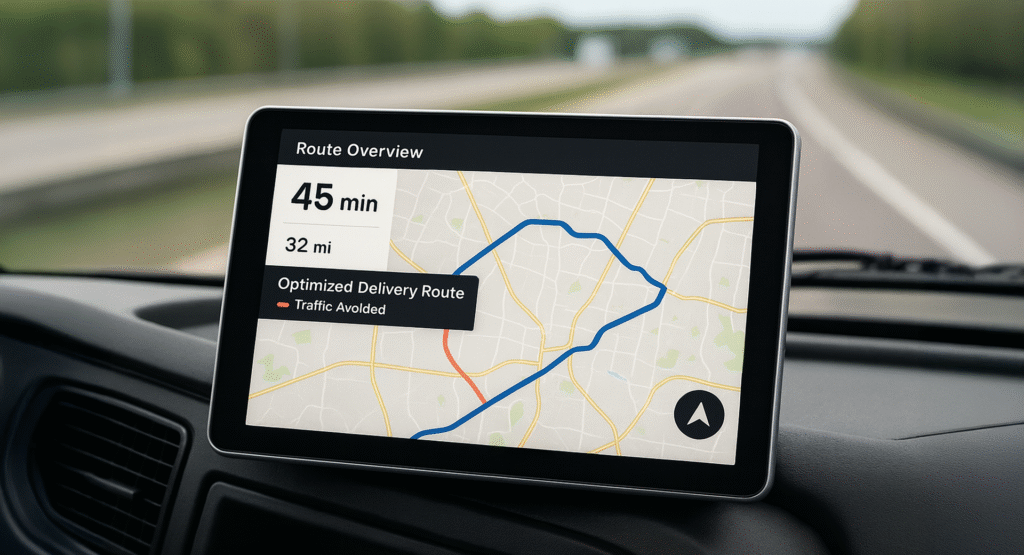
Mobile workforce management platforms provide drivers with optimized routes and turn-by-turn navigation that improves efficiency while adapting to real-time conditions including traffic delays, weather events, and customer scheduling changes. This navigation capability transforms driver productivity by eliminating the inefficiencies of paper maps and static route planning while enabling continuous optimization throughout the workday.
Dynamic route optimization adjusts driver routes throughout the day based on traffic conditions, completed deliveries, new assignments, and customer availability updates. This continuous optimization ensures drivers always follow the most efficient path while maximizing daily productivity through intelligent work sequencing.
Turn-by-turn navigation provides precise driving directions through integration with leading navigation platforms that include real-time traffic information, alternate route suggestions, and arrival time estimates. This navigation capability eliminates the time drivers waste searching for addresses while reducing the stress and frustration of navigating unfamiliar areas.
Customer-specific instructions embedded in route information provide drivers with gate codes, parking instructions, receiving contact information, and special delivery requirements before arrival. This information access eliminates delays from missing critical details while improving customer satisfaction through smooth delivery execution.
Multi-stop optimization sequences delivery stops in the most efficient order considering factors including delivery time windows, traffic patterns, and customer priority. This optimization can increase daily delivery capacity by 15-25% compared to manual route planning while reducing fuel consumption and vehicle wear.
Real-time traffic integration automatically routes drivers around accidents, construction, and congestion that would otherwise cause delays. This traffic avoidance reduces late deliveries while minimizing the driver frustration that traffic delays create.
Geofencing capabilities automatically trigger notifications and workflow actions when drivers arrive at or depart from customer locations. These location-based triggers enable automatic time tracking, customer notifications, and workflow progression without requiring manual driver action.
Time Tracking and Hours of Service Compliance
Mobile workforce management platforms automate time tracking and hours of service compliance through electronic logging that eliminates paper processes while ensuring regulatory compliance and accurate payroll processing. This automation reduces administrative burden while preventing the costly violations that manual compliance approaches generate.
Electronic logging device integration connects mobile workforce management platforms with ELD systems to automatically track driving hours, duty status, and rest periods required by hours of service regulations. This integration eliminates manual log maintenance while ensuring compliance with complex regulations that vary by driver classification and jurisdiction.
Automated time capture records start times, break periods, and completion times for all work activities without requiring manual time clock entry. This automation improves payroll accuracy while eliminating time theft and the disputes that manual timekeeping generates.
Compliance alerts notify drivers and dispatchers when hours of service limits approach, enabling proactive planning that prevents violations. These alerts reduce the regulatory risk while supporting driver scheduling that maximizes available hours without creating compliance issues.
Duty status management enables drivers to update their status through simple mobile interfaces that reflect current activities including driving, on-duty not driving, sleeper berth, and off-duty periods. This easy status management ensures accurate compliance records while reducing the complexity that traditional paper logs created.
Inspection readiness features ensure drivers always have immediate access to required logs and supporting documentation during roadside inspections. This electronic access eliminates the penalties and delays that missing or inaccurate paper logs would create.
Payroll integration automatically transfers time data to payroll systems, eliminating manual data entry while ensuring accurate compensation for all worked hours. This integration reduces payroll processing costs while preventing the payment errors and disputes that manual processes generate.
Driver Experience and Retention Benefits
Mobile workforce management technology dramatically improves driver job satisfaction through reduced administrative burden, improved communication, and recognition of professional performance that contributes to the retention improvements desperately needed across the transportation industry. This driver experience enhancement represents one of the most valuable but often overlooked benefits of mobile technology adoption.
Administrative burden reduction eliminates time-consuming paperwork that drivers resent and delays their return home at shift end. Digital documentation completion takes minutes rather than the 30-60 minutes daily that paper processes require, giving drivers valuable personal time while demonstrating employer respect for work-life balance.
Communication improvement reduces the frustration of poor coordination and inadequate information that traditional communication methods create. Instant messaging and comprehensive work order information enable drivers to work confidently while reducing the stress of uncertainty about assignments, customer requirements, and operational expectations.
Professional recognition through performance data and safety scoring demonstrates organizational appreciation for excellent work while providing objective evidence that supports advancement opportunities. This data-driven recognition appeals to drivers who want acknowledgment of their professional skills and consistent performance.
Technology enablement positions organizations as modern employers who invest in tools that make driver jobs easier and more efficient. This technology-forward image appeals particularly to younger drivers who expect mobile tools in professional environments while demonstrating organizational commitment to workforce success.
Work-life balance improvements result from improved efficiency that enables earlier shift completion and reduced after-hours phone calls that interrupt personal time. These quality of life improvements significantly impact retention in an industry where driver satisfaction critically affects workforce stability.
Voice and feedback mechanisms built into mobile platforms enable drivers to communicate concerns, suggestions, and feedback easily. This two-way communication demonstrates organizational interest in driver perspectives while identifying improvement opportunities that enhance operations and driver satisfaction simultaneously.
Implementation Strategies for Mobile Technology
Successful mobile workforce management implementation requires strategic planning that addresses technology selection, driver training, change management, and phased rollout approaches that minimize disruption while accelerating benefit realization. The most effective implementations prioritize driver experience alongside operational benefits to ensure adoption and long-term success.
Driver involvement in technology selection ensures chosen platforms meet driver needs while building buy-in for implementation. Pilot programs involving representative drivers provide valuable feedback that guides platform selection and configuration decisions while creating champions who support broader rollout.
Training program development emphasizes hands-on practice with mobile devices and applications rather than classroom instruction that drivers find frustrating and ineffective. Short, focused training sessions with immediate real-world application enable faster proficiency while respecting driver time and learning preferences.
Phased rollout approaches implement mobile workforce management gradually, starting with volunteer drivers or specific operational areas before expanding organization-wide. These phased approaches enable process refinement and troubleshooting before full deployment while demonstrating benefits that encourage broader adoption.
Support infrastructure including help desk capabilities, device replacement processes, and technical troubleshooting ensures drivers receive prompt assistance when issues arise. This support demonstrates organizational commitment to technology success while preventing the frustration that unresolved technical problems create.
Performance monitoring tracks adoption rates, technology utilization, and benefit realization to verify implementation success while identifying areas requiring additional focus. This monitoring enables timely intervention when adoption lags while demonstrating value that justifies ongoing investment.
Continuous improvement processes incorporate driver feedback and operational experience into ongoing platform enhancements and workflow refinements. This continuous improvement demonstrates responsiveness to user needs while maximizing long-term value from technology investments.
Empowering Your Mobile Workforce
Mobile workforce management represents one of the highest-value technology investments available to transportation organizations, delivering immediate productivity gains, safety improvements, and driver satisfaction enhancements that address the industry’s most pressing operational and workforce challenges. The evidence is compelling: organizations that empower drivers with modern mobile technology consistently outperform competitors across productivity, safety, retention, and customer satisfaction metrics.
The competitive necessity for mobile workforce management intensifies as driver shortages worsen and operational efficiency requirements increase. Organizations that continue forcing drivers to operate with paper processes and phone-based communication face irreversible disadvantage against competitors who leverage technology to maximize driver productivity while improving job satisfaction that reduces costly turnover.
Technology maturity and proven implementation approaches make mobile workforce management adoption less risky and more accessible than ever before. Cloud-based platforms, intuitive mobile applications, and comprehensive integration capabilities enable rapid deployment with measurable benefits appearing within weeks of implementation.
The financial returns from mobile workforce management extend beyond direct productivity gains to include safety cost reduction, driver retention improvements, and customer satisfaction enhancements that strengthen competitive positioning and support business growth. These benefits compound over time as organizations optimize workflows and capture additional value from comprehensive operational data.
The time to implement mobile workforce management is now, as every day of delayed adoption represents preventable costs through wasted driver time, safety incidents, turnover, and operational inefficiency. Organizations that act decisively to empower their mobile workforce with modern technology will build the operational excellence and workforce satisfaction that defines industry leadership.
Whether managing a small delivery fleet or coordinating thousands of drivers across national operations, mobile workforce management technology provides proven pathways to productivity improvement, safety enhancement, and competitive advantage. The question is not whether mobile technology benefits your operation, but how quickly you can implement these driver-empowering capabilities that transform mobile workforce performance while addressing the retention challenges that threaten industry sustainability.