
Demand Forecasting Accuracy: How Predictive Analytics Prevent Stockouts and Overstock
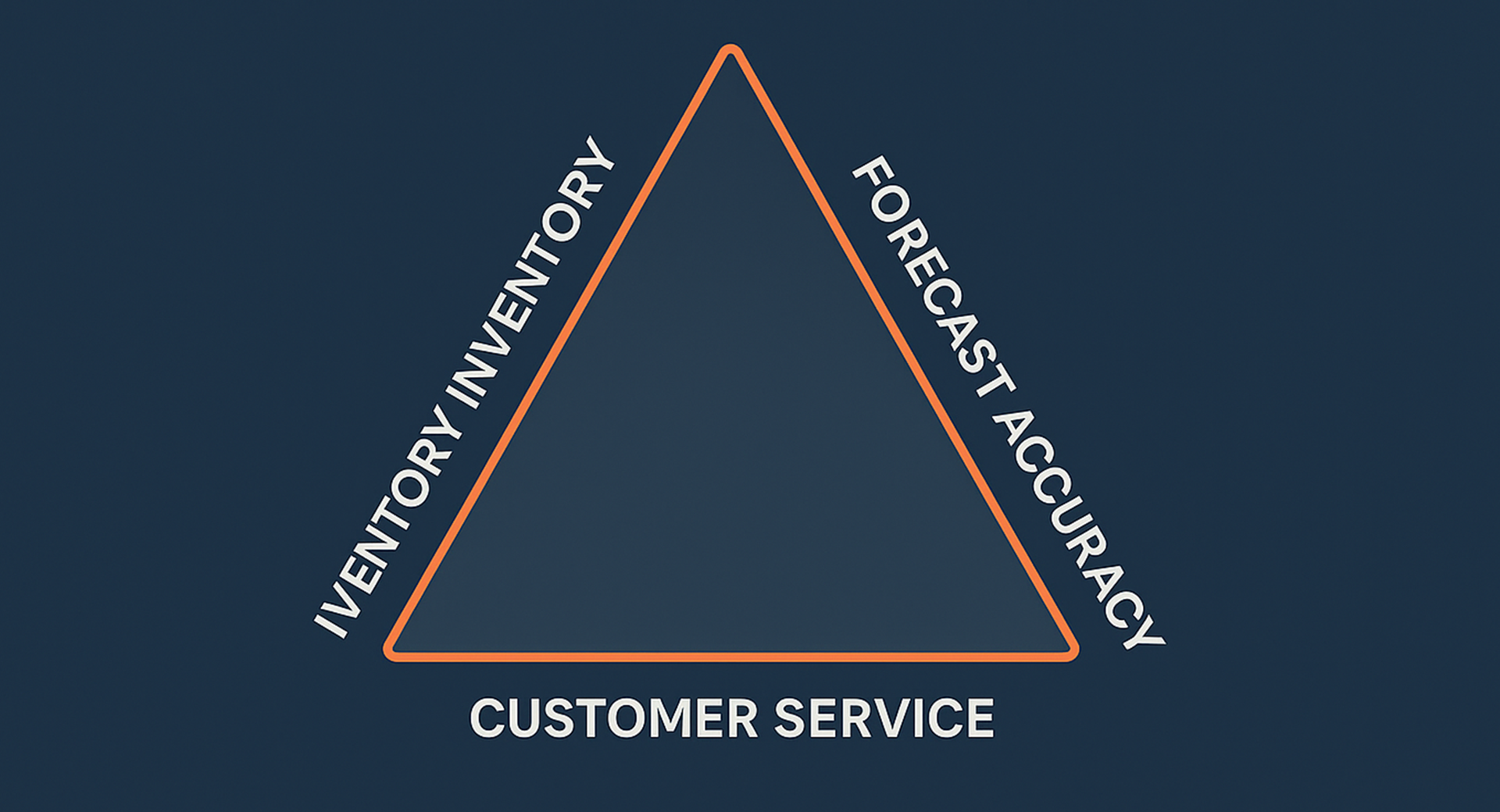
Inventory planners face an impossible balancing act that costs businesses billions annually: order too much and watch cash flow evaporate into warehouses full of products nobody wants, order too little and lose sales to competitors who actually have stock available. Traditional demand forecasting methods rely on historical averages and gut instinct, creating planning errors of 30-50% that force companies to choose between excessive safety stock that drains working capital or frequent stockouts that damage customer relationships and destroy revenue opportunities. The companies breaking free from this inventory nightmare have discovered that predictive analytics transforms demand forecasting from educated guessing into precise science that anticipates customer needs with unprecedented accuracy. Modern forecasting systems analyze thousands of variables simultaneously—seasonal patterns, promotional impacts, economic indicators, weather trends, and even social media sentiment—to predict demand with accuracy rates exceeding 85% compared to the 50-60% accuracy of traditional methods. This isn’t just about better spreadsheets; it’s about AI-powered platforms that learn from every transaction, automatically adjust to market changes, and provide the confidence needed to optimize inventory investment without sacrificing customer service. The result is inventory optimization that reduces working capital requirements by 20-30% while simultaneously improving product availability and customer satisfaction. Smart supply chain leaders have learned that perfect inventory balance isn’t achieved through more conservative planning or larger safety stocks—it comes from prediction accuracy that eliminates the guesswork driving excessive costs and frustrating stockouts.
The Cost of Inaccurate Demand Forecasting
Demand forecasting errors create a cascade of financial consequences that devastate business profitability while remaining largely invisible to traditional accounting systems. Studies indicate that the average company loses 10-15% of annual revenue due to poor demand forecasting, with costs distributed across excess inventory, stockouts, expedited shipping, and markdown losses that compound throughout the supply chain.
Excess inventory carrying costs represent the most obvious financial drain from forecasting inaccuracy, with businesses typically spending 20-30% of inventory value annually on storage, handling, insurance, and capital costs. When forecasting errors create unnecessary inventory accumulation, these carrying costs multiply while tying up cash that could generate returns elsewhere in the business. For a company with $10 million in excess inventory, annual carrying costs easily exceed $2-3 million in preventable expenses.
Stockout costs often exceed excess inventory expenses despite receiving less management attention, as lost sales, customer dissatisfaction, and competitive disadvantage create both immediate revenue loss and long-term market position erosion. Industry research suggests that stockout costs typically range from 20-40% of the product’s selling price, considering immediate lost sales, customer service expenses, and long-term loyalty impacts. These costs multiply when customers shift permanently to competitors who maintain better product availability.
Expedited freight and production expenses skyrocket when forecasting errors force companies to respond urgently to unexpected demand spikes or inventory shortfalls. Rush orders, overtime production, and premium shipping costs can increase per-unit expenses by 50-200%, destroying profit margins while creating operational chaos that impacts quality and service across the organization.
Markdown and obsolescence losses result from excess inventory that must be sold below cost or written off entirely when demand fails to materialize as forecasted. These losses typically represent 5-10% of total inventory value in industries with short product lifecycles or seasonal demand patterns, creating direct profitability impacts that flow immediately to the bottom line.
Supply chain inefficiency compounds throughout the network when inaccurate forecasting creates misalignment between supply and demand. Suppliers struggle with erratic order patterns, transportation assets sit idle or get overbooked, and warehouse operations alternate between understaffing and costly overtime based on demand swings that accurate forecasting could prevent.
How Traditional Forecasting Methods Fail
Traditional demand forecasting approaches rely heavily on historical sales averages and linear projections that fundamentally misunderstand how modern markets operate. These methods assume stable demand patterns and predictable seasonality that simply don’t exist in today’s volatile, promotion-driven, and rapidly changing business environment. The result is systematic forecasting error that traditional methods cannot overcome regardless of planner expertise or effort.
Historical average methods ignore the complex factors driving current demand, treating last year’s sales as the primary predictor of future performance. This approach fails catastrophically when market conditions change, new competitors emerge, or customer preferences shift. By the time historical averages reflect these changes, significant financial damage has already occurred through inventory imbalances and lost sales opportunities.
Manual adjustment processes inject subjective bias and inconsistency into forecasting, as different planners make different assumptions about promotions, market trends, and demand drivers. This inconsistency creates forecast variance that compounds across product lines and geographies, making aggregate planning nearly impossible while undermining confidence in the entire forecasting process.
Limited data incorporation restricts traditional forecasting to basic inputs like historical sales and seasonal patterns while ignoring valuable external factors including economic indicators, weather patterns, competitive activity, and social media trends. This narrow focus means traditional forecasts miss early warning signals and market shifts that external data would reveal weeks or months before internal sales data reflects the changes.
Static forecasting cycles that update monthly or quarterly cannot respond to the rapid market changes that characterize modern commerce. By the time traditional forecasts are updated, market conditions have often changed significantly, rendering the forecasts obsolete before they can inform inventory decisions effectively.
Collaboration barriers between departments prevent traditional forecasting from incorporating valuable insights from sales teams, marketing departments, and customer service groups who often detect demand changes before they appear in historical data. This siloed approach means critical market intelligence remains trapped in individual departments rather than informing unified demand plans.
Understanding Predictive Analytics for Demand Planning
Predictive analytics transforms demand forecasting by analyzing vast datasets to identify patterns, correlations, and causal relationships that human planners could never discover through manual analysis. These advanced analytical methods use statistical algorithms and machine learning to process millions of data points simultaneously, identifying subtle demand drivers and creating forecasts that adapt automatically as market conditions change.
Statistical forecasting models form the foundation of predictive analytics, using sophisticated algorithms including exponential smoothing, ARIMA, and regression analysis to identify demand patterns and generate baseline forecasts. These models process historical data more thoroughly than traditional methods while automatically adjusting for seasonality, trends, and cyclical patterns that impact demand across different time horizons.
Pattern recognition capabilities enable predictive analytics systems to identify demand relationships that aren’t obvious from simple historical analysis. These systems detect correlations between seemingly unrelated variables—such as weather patterns affecting beverage sales or economic indicators predicting industrial equipment demand—that traditional forecasting completely misses.
Real-time data processing allows modern forecasting systems to update predictions continuously as new information becomes available, rather than waiting for monthly or quarterly forecast cycles. This continuous updating ensures forecasts reflect current market conditions and respond quickly to emerging trends or disruptions that could impact demand.
Multi-variable analysis simultaneously considers dozens or hundreds of demand drivers to create comprehensive forecasts that account for complex market dynamics. Unlike traditional methods that struggle to incorporate more than a few variables, predictive analytics handles massive complexity while automatically weighting each factor based on its actual impact on demand patterns.
Scenario planning capabilities enable forecasting systems to model multiple potential futures and quantify the probability and impact of different demand scenarios. This capability helps planners prepare for uncertainty while making informed inventory decisions based on comprehensive risk assessment rather than single-point forecasts that ignore market volatility.
A.I. and Machine Learning Transforming Forecasting Accuracy
Artificial intelligence and machine learning represent the next evolution in demand forecasting, creating self-improving systems that learn from every transaction and automatically enhance their accuracy over time. These technologies don’t just process data faster—they identify complex nonlinear relationships and adapt to changing market conditions in ways that traditional statistical methods cannot match.
Deep learning algorithms analyze vast amounts of unstructured data including social media content, news articles, and customer reviews to identify emerging trends and sentiment shifts that predict demand changes before they appear in sales data. These algorithms can detect subtle signals in online conversations or search patterns that indicate changing customer preferences weeks or months before traditional forecasting methods recognize the shift.
Neural networks create sophisticated demand models that capture complex relationships between multiple variables simultaneously, enabling more accurate predictions in volatile markets or for products with complex demand drivers. These networks continuously adjust their internal parameters based on forecast performance, automatically improving accuracy as they process more transactions and market data.
Ensemble methods combine multiple forecasting algorithms to create more robust predictions that avoid the weaknesses of any single approach. By leveraging the strengths of different analytical methods, ensemble forecasting achieves higher accuracy and greater stability than individual models while reducing the risk of systematic forecasting bias.
Anomaly detection capabilities identify unusual demand patterns or data irregularities that could indicate errors, market disruptions, or emerging trends requiring investigation. This detection helps planners distinguish between genuine demand changes and data quality issues while flagging unusual patterns that deserve immediate attention.
Automated model selection enables AI systems to identify the optimal forecasting algorithm for each product or market segment based on historical performance and data characteristics. This automated optimization ensures every forecast uses the most appropriate method rather than forcing all products through the same forecasting approach regardless of fit.
Transfer learning allows forecasting systems to apply knowledge gained from mature products or established markets to new products or emerging geographies where historical data is limited. This capability dramatically improves forecasting accuracy for new product introductions and market expansions that traditional methods cannot handle effectively.
Advanced Data Sources Improving Predictions
Modern demand forecasting leverages diverse data sources far beyond internal sales history to create comprehensive market understanding and superior prediction accuracy. These external data inputs provide early warning of demand shifts and enable forecasting systems to anticipate changes that internal data alone would never reveal until after they impact sales performance.
Economic indicators including GDP growth, unemployment rates, consumer confidence, and industry-specific metrics provide valuable context for demand forecasting, especially for products with strong correlation to economic conditions. Advanced forecasting systems automatically incorporate relevant economic data to adjust predictions based on macroeconomic trends that traditional forecasting ignores.
Weather data integration enables forecasting for products with weather-dependent demand including beverages, seasonal apparel, and outdoor equipment. By incorporating historical weather patterns and future forecasts, these systems predict demand shifts days or weeks before they occur, enabling proactive inventory positioning that captures sales opportunities while avoiding excess stock.
Social media sentiment analysis monitors online conversations, product mentions, and brand discussions to identify emerging trends and shifting customer preferences. This analysis provides real-time market intelligence that traditional customer surveys or focus groups could never deliver with comparable speed and scale.
Competitive intelligence including competitor pricing, promotional activity, and product launches helps forecasting systems anticipate market share shifts and demand impacts from competitive actions. This intelligence enables proactive response to competitive threats while identifying opportunities to capture additional demand when competitors face supply constraints.
Point-of-sale data from retail partners provides granular visibility into actual consumer demand patterns versus distributor ordering that may not reflect true consumer behavior. This sell-through data enables manufacturers to forecast consumer demand accurately while avoiding the distortion created by retailer inventory management decisions.
Search and browsing data from e-commerce platforms reveals customer interest and purchase intent before transactions occur, enabling forecasting systems to predict demand increases or decreases based on online shopping behavior. This leading indicator data provides weeks of advance notice for demand changes that sales data would reveal only after inventory decisions have already been made.
Implementation Strategies for Forecasting Systems
Successful demand forecasting transformation requires strategic implementation that addresses data quality, organizational readiness, and change management alongside technology deployment. The most effective implementations follow proven methodologies that build forecasting capability progressively while demonstrating value quickly to secure ongoing organizational support and investment.
Data infrastructure development establishes the foundation for advanced forecasting by ensuring historical sales data, inventory records, and external data sources are accurate, complete, and accessible. This infrastructure work often reveals data quality issues that must be resolved before forecasting algorithms can generate reliable predictions, making it a critical first step that cannot be rushed or skipped.
Pilot program design focuses initial forecasting implementation on specific product categories or market segments where data quality is strong and business impact is significant. These pilots demonstrate forecasting value quickly while enabling teams to learn and refine processes before expanding to the complete product portfolio.
Cross-functional collaboration ensures forecasting implementation incorporates insights from sales, marketing, operations, and finance teams who each bring valuable perspective on demand drivers and market dynamics. This collaboration builds organizational buy-in while ensuring forecasting systems reflect comprehensive market understanding rather than narrow analytical exercises.
Technology platform selection balances forecasting sophistication with implementation complexity and organizational technical capabilities. Cloud-based forecasting platforms often provide the best combination of advanced analytics, scalability, and ease of implementation for mid-sized organizations, while larger enterprises may require more customized solutions that integrate deeply with existing systems.
Performance benchmarking establishes baseline forecasting accuracy before implementation to enable clear measurement of improvement and ROI demonstration. Without accurate baseline measurement, organizations cannot prove forecasting value or identify specific areas where new systems deliver the greatest benefits.
Training and capability building ensures planning teams understand how to use advanced forecasting systems effectively while developing the analytical skills needed to interpret results and make informed inventory decisions. This training should emphasize business judgment and system capabilities rather than technical details that distract from practical application.
Measuring Forecasting Accuracy and Business Impact
Comprehensive forecasting performance measurement requires tracking both accuracy metrics and business impact indicators that demonstrate how improved predictions translate into financial results and operational improvements. These measurements provide the data needed to optimize forecasting systems continuously while proving value to executive stakeholders who control technology investments and organizational priorities.
Mean Absolute Percentage Error (MAPE) provides the standard industry metric for forecasting accuracy, measuring the average percentage difference between forecasted and actual demand. World-class forecasting operations achieve MAPE below 20% for most product categories, compared to 30-50% typical of traditional methods. Reducing MAPE from 40% to 20% often translates directly into millions of dollars in inventory optimization and lost sales prevention.
Forecast bias measurement identifies systematic tendencies to over-forecast or under-forecast demand that create predictable inventory imbalances. Eliminating forecast bias enables more confident inventory decisions and reduces the safety stock required to maintain target service levels, directly impacting working capital requirements and storage costs.
Service level achievement tracks the percentage of customer orders filled from available inventory without stockouts or backorders. Improved forecasting accuracy should increase service levels by 3-5 percentage points while simultaneously reducing inventory investment, demonstrating the dual benefit of better predictions enabling optimal inventory positioning.
Inventory turnover improvement results from more accurate forecasting enabling lower average inventory levels while maintaining or improving product availability. Increasing inventory turns from 6x to 8x annually represents a 25% reduction in average inventory investment and corresponding carrying cost savings.
Working capital reduction quantifies the financial impact of inventory optimization enabled by improved forecasting accuracy. For companies with $50 million in inventory, improving forecast accuracy to reduce inventory by 20% frees $10 million in working capital that can be deployed more productively elsewhere in the business.
Lost sales prevention measures revenue captured through improved product availability enabled by better demand prediction. Even small improvements in service level can translate into significant revenue gains, as reducing stockouts from 5% to 2% of demand represents substantial sales capture that flows directly to profitability.
Industry-Specific Forecasting Applications
Retail and consumer goods companies leverage advanced demand forecasting to optimize store-level inventory while managing complex promotional calendars and seasonal demand patterns. These organizations use predictive analytics to coordinate inventory positioning across distribution networks while maintaining the product availability that drives customer satisfaction and competitive advantage.
Manufacturing operations use demand forecasting to align production planning with market demand while optimizing raw material procurement and capacity utilization. Accurate forecasting enables just-in-time manufacturing that reduces inventory investment while ensuring production capacity matches actual demand rather than forecasts that systematically over or under-estimate market needs.
Fashion and apparel companies face particularly challenging forecasting requirements due to short product lifecycles, seasonal demand volatility, and trend-driven consumer preferences. Advanced forecasting systems help these organizations predict initial demand for new styles while optimizing markdown timing and pricing for end-of-season inventory clearance.
Food and beverage distributors use demand forecasting to manage perishable inventory while maintaining product freshness and minimizing waste. Predictive analytics enables these organizations to balance inventory investment against spoilage risk while ensuring product availability across diverse distribution channels.
Pharmaceutical and healthcare companies employ demand forecasting to manage product lifecycles, regulatory requirements, and patient demand patterns while maintaining the high service levels required in healthcare supply chains. These forecasts inform production planning, distribution network design, and inventory positioning that ensures critical products remain available when patients need them.
Technology and electronics manufacturers use advanced forecasting to manage rapid product obsolescence and technology transitions while maintaining service parts availability. These organizations must balance aggressive inventory reduction against the service requirements that maintain customer satisfaction and brand reputation in competitive markets.
Building Your Forecasting Excellence Strategy
Demand forecasting accuracy represents one of the most impactful improvements available to supply chain organizations, delivering immediate financial benefits through inventory optimization while enabling the service quality that drives customer satisfaction and competitive advantage. The evidence is overwhelming: organizations with superior forecasting capabilities consistently outperform competitors across profitability, growth, and customer satisfaction metrics.
The competitive necessity for forecasting excellence continues intensifying as market volatility increases, product lifecycles shorten, and customer expectations for product availability rise. Organizations that maintain traditional forecasting approaches risk falling progressively behind competitors who leverage predictive analytics to optimize inventory investment while maintaining superior product availability.
Technology maturity and proven implementation methodologies make demand forecasting transformation less risky and more accessible than ever before. Cloud-based forecasting platforms, comprehensive data integration capabilities, and proven change management approaches enable organizations to implement advanced forecasting capabilities without massive technology investments or multi-year implementation timelines.
The financial returns from improved forecasting accuracy are immediate and substantial, with typical implementations achieving payback within 6-12 months through inventory reduction, lost sales prevention, and operational efficiency improvements. These benefits continue indefinitely as forecasting systems learn and improve while providing the foundation for additional supply chain optimization initiatives.
The time to act is now, as every month of forecasting inaccuracy represents preventable costs through excess inventory, lost sales, and operational inefficiency that directly impact profitability and competitive position. Organizations that delay forecasting transformation risk falling irreversibly behind competitors who are already capturing the benefits of predictive analytics and AI-powered demand planning.
Whether managing inventory for a single location or coordinating global supply chains, predictive analytics and advanced forecasting technology provide proven pathways to inventory optimization, service improvement, and competitive advantage. The question is not whether forecasting improvement applies to your organization, but how quickly you can implement these capabilities to capture the financial benefits and market advantages that define supply chain excellence.